
How to Start Meditation for Beginners
Meditation is a simple yet powerful wellness practice that has a lot of benefits. It reduces stress, calms the mind, and improves concentration and overall well-being, among others.
One of the best things about meditation is that it is accessible to everyone. Below, we tell you how to start meditation for beginners.
Easy Ways to Start Meditation for Beginners

1. Allocate Some Time and Place
The first thing to do is to allocate some time. Designate a convenient time when you know you won’t be distracted and have the freedom to relax. This varies from person to person. You can meditate in the morning to prepare yourself for the rest of the day, for example.
You can also meditate just before you sleep to relax or release tensions you have felt throughout the day.
The time doesn’t need to be long. If you’re just starting, allocating 10 minutes a day will be enough. It is a good idea to meditate at the same time every day.
Once it becomes a part of your daily routine, you can allocate more time as needed. As for the place, you can practice anywhere. All you need is a quiet, well-ventilated room.
2. Sit in a Comfortable Posture
The second step in our how to start meditation for beginners guide is to sit in a comfortable posture. The key here is to strike a delicate balance between comfort and alertness.
On the one hand, you should sit comfortably so that you can focus. On the other hand, you don’t want to feel too comfortable that you fall asleep. You want to stay alert.
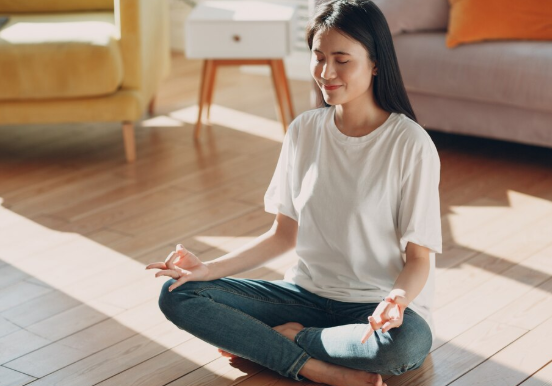
You can sit cross-legged on a mat. You can also sit on a chair. Either way, your back should be straight. Make sure that your sitting position makes you feel comfortable and not in pain. If you can’t sit, lying down can also work.
3. Focus on Your Breath
There are many types of meditation. Breathing meditation is one of the most accessible and beginner-friendly. You don’t need any special equipment or spiritual background. Only breath is needed, something that we all have.
Sit comfortably and close your eyes. Take a few deep breaths. Deep breathing should help you calm down. Let your body breathe in its natural rhythm. Don’t control your breathing. Simply focus on it.
The breathing can be fast or slow. It doesn’t matter. You might notice your breathing pattern may change as time goes on. Again, it doesn’t matter. No need to control the breathing. Once you are calm and comfortable, notice the sensations you feel from breathing.
The sensations can come from your nostrils, chest, or belly. Focus on where the sensation feels the clearest. When you breathe in, notice it. When you breathe out, notice it too. Be aware of your in-breath and out-breath.
4. Keep Returning to Your Breath
The next step in our how to start meditation for beginners guide is to keep returning to your breath. As you meditate, your mind will get distracted, pulling away your focus from your breath. This is normal, especially in the beginning. If anything, you can expect it to happen again and again.
When your mind gets distracted, just take note of it and return to your breath. If your mind gets distracted 10 times, return to your breath 10 times.
Don’t get frustrated. Be patient and gentle with yourself. The fact that you notice that you are getting distracted and returning to your breath is an achievement in itself. Once your meditation is over, you can slowly let go of your focus and gently open your eyes.
FAQs How to Start Meditation for Beginners

What are the main benefits of meditation?
Meditation helps reduce stress, calm the mind, and improve concentration and overall well-being.
How much time should a beginner allocate for meditation?
For beginners, 10 minutes a day is a good starting point. You can increase the time as it becomes part of your routine.
What’s the best posture for meditation?
Sit in a comfortable, alert posture with a straight back. You can sit cross-legged, on a chair, or even lie down if needed. The goal is to be comfortable without falling asleep.
Conclusion
That’s how to start meditation for beginners. Meditation is a journey. Are you ready to start your journey? If you are interested in meditation or other wellness practices, visit True Aura.
